When disasters damages your property, the aftermath can be overwhelming. Beyond the structural repairs, dealing with your damaged personal belongings – AKA your “contents” – presents a critical decision: should you pay out of pocket or file an insurance claim? This choice can impact your financial well-being and the road to recovery.
Understanding Out-of-Pocket vs. Insurance
At its core, paying out-of-pocket means covering the costs of repairing or replacing your damaged contents without involving your insurance provider. This approach is often considered for minor damages in situations where the cost falls below your deductible, or when your policy explicitly excludes the damage. The primary draw here is control: you directly manage the restoration process and potentially avoid premium increases.
On the other end, filing an insurance claims involves notifying your insured, documenting the loss, and working with adjusters to determine coverage. While insurance offers financial assistance for significant damages exceeding your deductible, it comes with its own set of considerations, including potential rate increases, policy exclusions, and the possibility of claim denials.
Pros / Cons of Self-Pay vs Insurance
Self-Pay Advantages
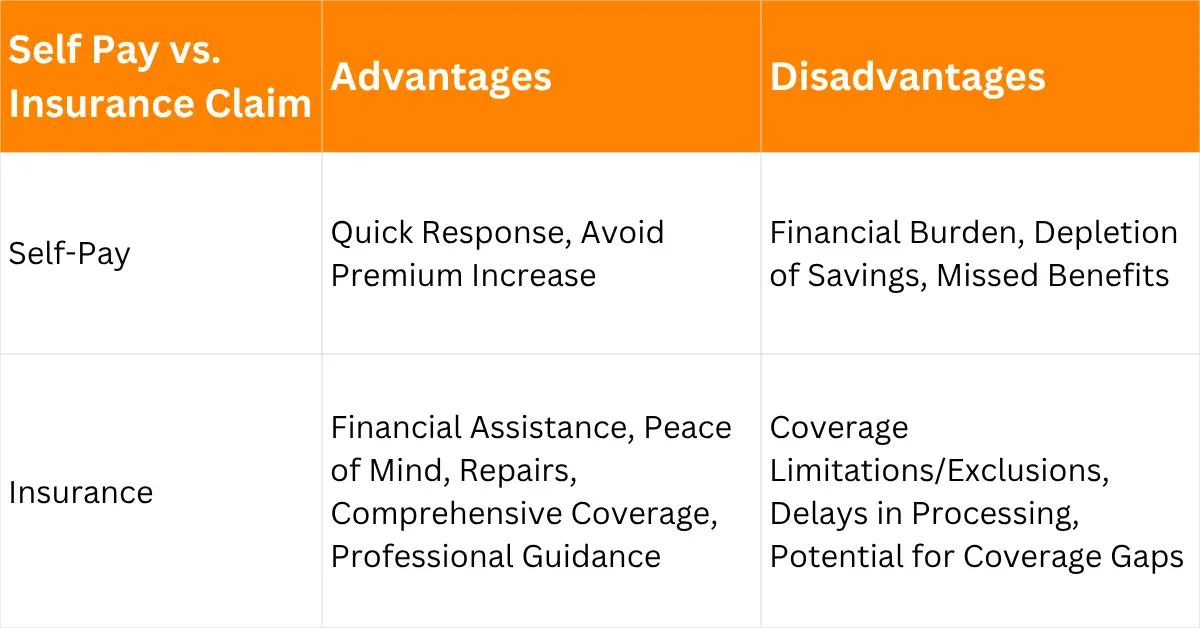
Quick Response: No waiting for insurance adjusters or approvals, allowing for immediate restoration, which helps prevent susceptible items from further damage.
Avoid Premium Increases: By not filing a claim, the claim history stays clean, potentially preventing future rate hikes.
Self-Pay Disadvantages
Financial Burden: Bearing the full cost can be substantial when it comes to extensive damage. Replacing an entire household of contents after a disaster could cost a significant amount of money out of the homeowner’s own pocket.
Depletion of Savings: This approach can drain savings/emergency funds.
Missed Benefits: Forgoing benefits offered in a policy can take a toll if you miss out on the benefit of additional living expenses being covered if the property is inhabitable during the restoration process.
Insurance Advantages
Financial Assistance: Insurance provides important financial support to replace or repair personal belongings, the structure, etc., after a significant loss.
Peace of Mind: Knowing the coverage is there can ease the burden of unexpected loss after a disaster.
Timely Repairs: While there might be initial delays in processing, insurance companies often work to expedite the restoration process.
Comprehensive Coverage: Policies can provide coverage a wide range of disasters.
Professional Guidance: Insurers can guide the insured through the claims process, helping with paperwork and procedures.
Insurance Disadvantages
Coverage Limitations/Exclusions: The policy might not cover all the damages or specific items, or there might be sub-limits for certain high-value items. (Damage from a sewage backup is often excluded from standard policies and requires a separate rider.)
Delays in Processing: Paperwork, investigations, and negotiations can prolong the claims process.
Potential for Coverage Gaps: You might discover limitations in the policy only after a disaster strikes.
For instance, sometimes the cost to remediate a small kitchen fire with only soot damage might be less than your $5,000 deductible, making self-pay sensible. However, a water main break that floods your home and damages $40,000 worth of contents more than likely warrants an insurance claim.
Proactive Planning & Expert Guidance

No one plans for disaster, but being prepared can make a huge difference. Whether choosing to opt into self-pay for minor incidents or rely on insurance for major events, understanding your options and your policy before disaster strikes is important.
As content restoration and packout professionals, we understand the complexities of disaster recovery. We work with both self-pay clients and those navigating through their insurance claims.
Remember, while the decision to self-pay or file a claim rests with you, our goal is to provide professional content restoration solutions that give you peace of mind, regardless of whether you’ve chosen to self-pay vs insurance.
For more detailed information on selecting insurance coverage, we encourage you to visit our insurance page or contact us here.